
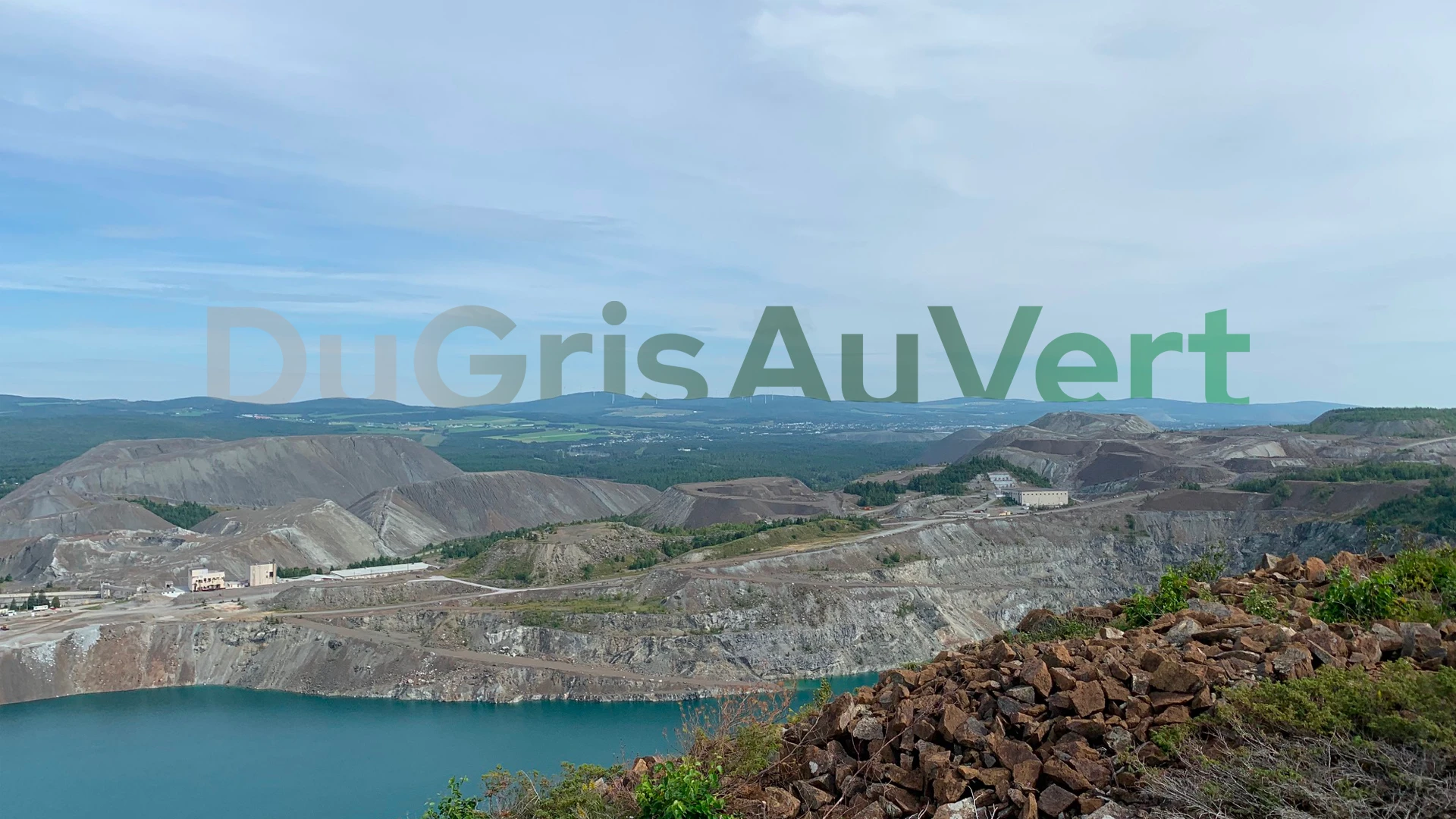
Goal of the approach
DuGrisAuVert was born from a regional initiative aimed at structuring and stimulating the ecosystem surrounding the circular mining economy in the MRC des Appalaches region. The initiative is the result of a collaboration between the MRC des Appalaches and the Ministry of Economy, Innovation and Energy, and is driven by the Société de développement économique de la région de Thetford (SDE).
Its main objectives are the creation of an advisory committee and the development of a 2040 strategic plan. This will stimulate the ecosystem and strategically guide the MRC's efforts regarding the recycling sector for the next fifteen years.
To achieve this, we created the DuGrisAuVert committee, whose mission will be to foster collaboration and exchanges between stakeholders in the ecosystem, prevent duplication of efforts, and develop a shared vision and values. Ultimately, all of this is to enable the region to develop the largest circular economy project in history as efficiently as possible.

The most important circular economy project in history
Strategic Plan 2040 DuGrisAuVert
The MRC des Appalaches wishes to thank all the people and organizations that contributed to the process of revitalizing mining areas and to the development of this collective strategic plan.
Maps of the main mining sites
- 2026 - Flintkote and Nationale Mining Sector
- 2026 - Boston and Carey Mining Sector
- 2026 - Bell, King Beaver & Johnson Mining Sector
- 2026 - Normandy Mining Sector
- 2026 - LAQ Mining Sector COL Sector
- 2026 - LAQ Mining Sector BL Sector
- 2026 - Federal Mining Sector
- 2026 - BC Mining Sector
- 2026 - East Broughton Sector
- 2026 - Complete MRC Sector
VISION 2040
By 2040, the MRC des Appalaches envisions itself as a territory that transforms its industrial legacy into levers for the future. Where tailings piles and brownfield sites once bore witness to the end of a mining cycle, a new ecosystem based on recovery, resilience and innovation is now emerging.
Our vision is based on a simple but ambitious principle: to make the recovery of mining waste and other territorial resources an engine of sustainable development, serving our economy, our quality of life and our collective identity.
We believe that our resources, whether material, human, or land-based, hold immense potential. By supporting the creation of a locally rooted circular economy, by valuing the know-how stemming from our industrial history, and by investing in innovative projects such as renewable energy production or the processing of strategic minerals, we want to build a territory that creates value without compromising the future.
But this transition will not happen without communities. It is by reconnecting citizens to their territory, by reinvesting in former mining areas, by supporting local initiatives, and by encouraging shared governance, that we will truly be able to revitalize our living environments.
Thetford Mines and its region have all the conditions in place to become a model. A model of a post-industrial territory that doesn't forget its origins, but that lucidly chooses where it wants to go. A territory that transforms its liabilities into resources, its challenges into opportunities, and its history into foundations for inclusive, green, and prosperous development.
Here is an overview of the interconnection between the components of the ecosystem surrounding the circular mining economy.
THE DuGrisAuVert COMMITTEE
We brought together, within the steering committee, a dozen key stakeholders representing all the regional strategic assets linked to the sector. Activities and brainstorming workshops, bringing together more than a hundred participants, took place across the region. The objective was to identify the following five strategic directions:
- Deploying a territorial circular economy with high social, environmental and economic value.
- To become a hub for innovation in critical minerals and environmental remediation materials.
- Accelerate the energy transition of the territory for the production and storage of renewable energy.
- Develop a distinctive tourism offering based on mining identity and the redevelopment of sites.
- Reconnecting communities to pride in their mining territory to support social cohesion and collective revitalization.
We have the ambition and the resources to collectively develop the largest circular economy project through the repurposing of mining waste. It's time to go from gray to green!
David Lemieux
KSM President
Guy Bérard
President of the Asbestos, Mazarin, 3R Mineral Company
Nathalie Vachon
Mayor of Saint-Joseph-de-Coleraine
Marc-Alexandre Brousseau
Mayor of Thetford Mines and Prefect of the MRC des Appalaches
Rick Lavergne
General Manager, MRC des Appalaches
Luc Rémillard
Director of Urban Planning and Economic Development, City of Thetford
Josua Turgeon
President of the Profectus Group
Chantal Gauvin
General Manager PEVCA
Stephan Vachon
Vice President, Sartigan Railway
Louis Cesar Pasquier
Professor and researcher, INRS CO2 storage and utilization
Gervais Soucy
Professor and Director, Department of Chemical Engineering and Biotechnological Engineering, University of Sherbrooke
Robert Rousseau
General Manager, CÉGEP de Thetford
Our Partners

Quebec

Minero

Kemitek
Cegep thetford

Satigan
MRC Appalaches
Chambre des commerces

Gr. Profectus

PEVCA

Ville Thetford

Groupe de concentration Becancour

Coalia

KSM Fertilizers

Université de sherbrooke

INRS

Municipalité de colerain

Société asbestos

3r mineral
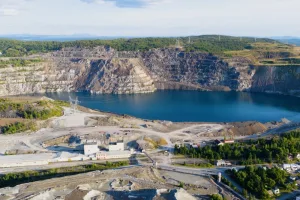
Carbon capture: a gold mine for Quebec? | Zone économie
News
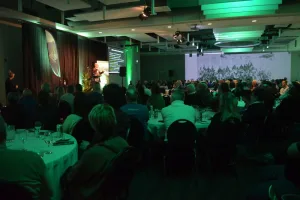
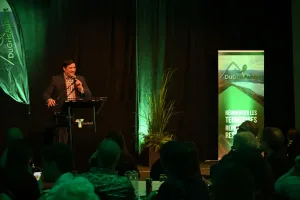
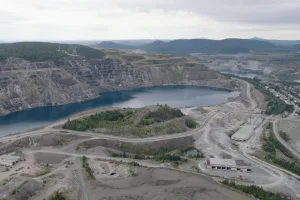


Media
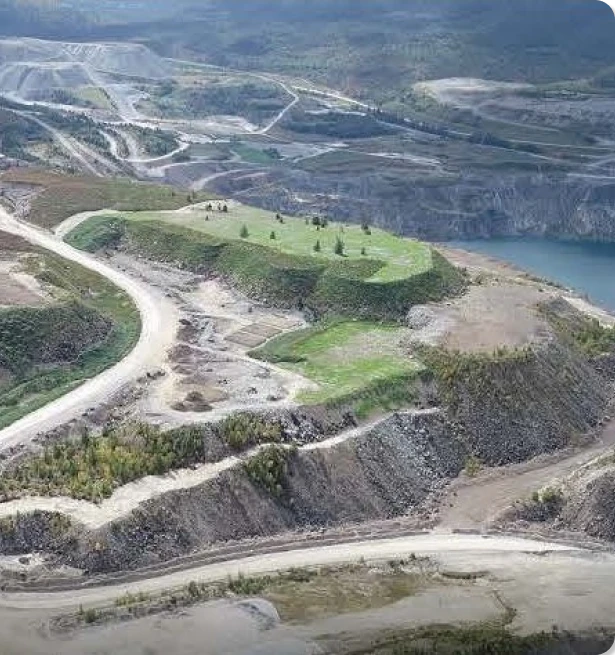
Frequently Asked Questions
Who can benefit from DuGrisAuVert's support?
Any company or organization that may need support in connection with a mining waste recovery project or a circular economy project.
What are the advantages of repurposing mining waste?
Reclaiming mining waste transforms a liability into an asset. Furthermore, many reclamation projects will aim to capture and store carbon, thus contributing to decarbonization and resulting in a tremendous environmental benefit. The value of mining waste (magnesium and nickel) in the Chaudière-Appalaches region is estimated at over $300 billion, and the socio-economic benefits will be enormous.
Can everyone get involved in the DuGrisAuVert project?
Contacting DuGrisAuVert means being at the forefront, having the right information and being in direct contact with the players in the field.
Resource Recovery Ecosystem
The greater Thetford Mines region has developed a unique and rich ecosystem around the mining industry over time. In recent years, the components of this ecosystem have evolved to adapt to its new realities. The maturity and richness of the regional ecosystem, combined with the global ecosystem, now make the reuse of mining waste and other local resources a central focus.
Here is an overview of the interconnection between the components of the ecosystem surrounding the revaluation of mining waste.